


Reference books
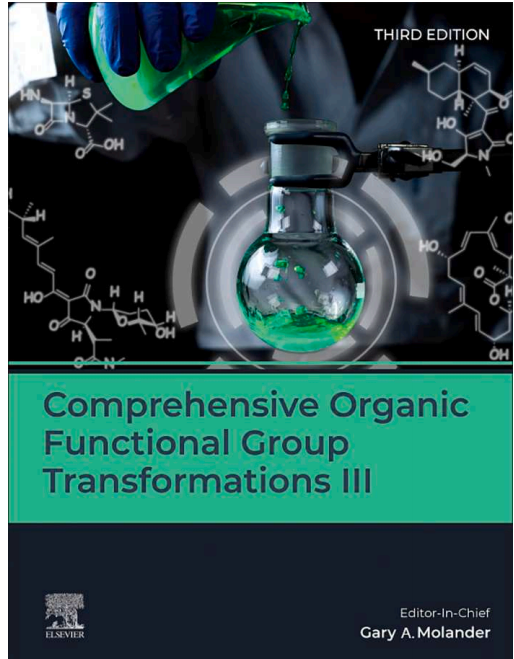
| Behera, P., Rakitin, O. and Rout, L. (2027) Vinyl- and Aryl Chalcogenides: Sulfur-, Selenium-, and Tellurium-Based Functional Groups. In: Molander, G. A. (ed.) Comprehensive Organic Functional Group Transformations III, vol. 2, pp. 511–595. UK: Elsevier; Comprehensive Organic Functional Group Transformations III:Article 00107: |
 |
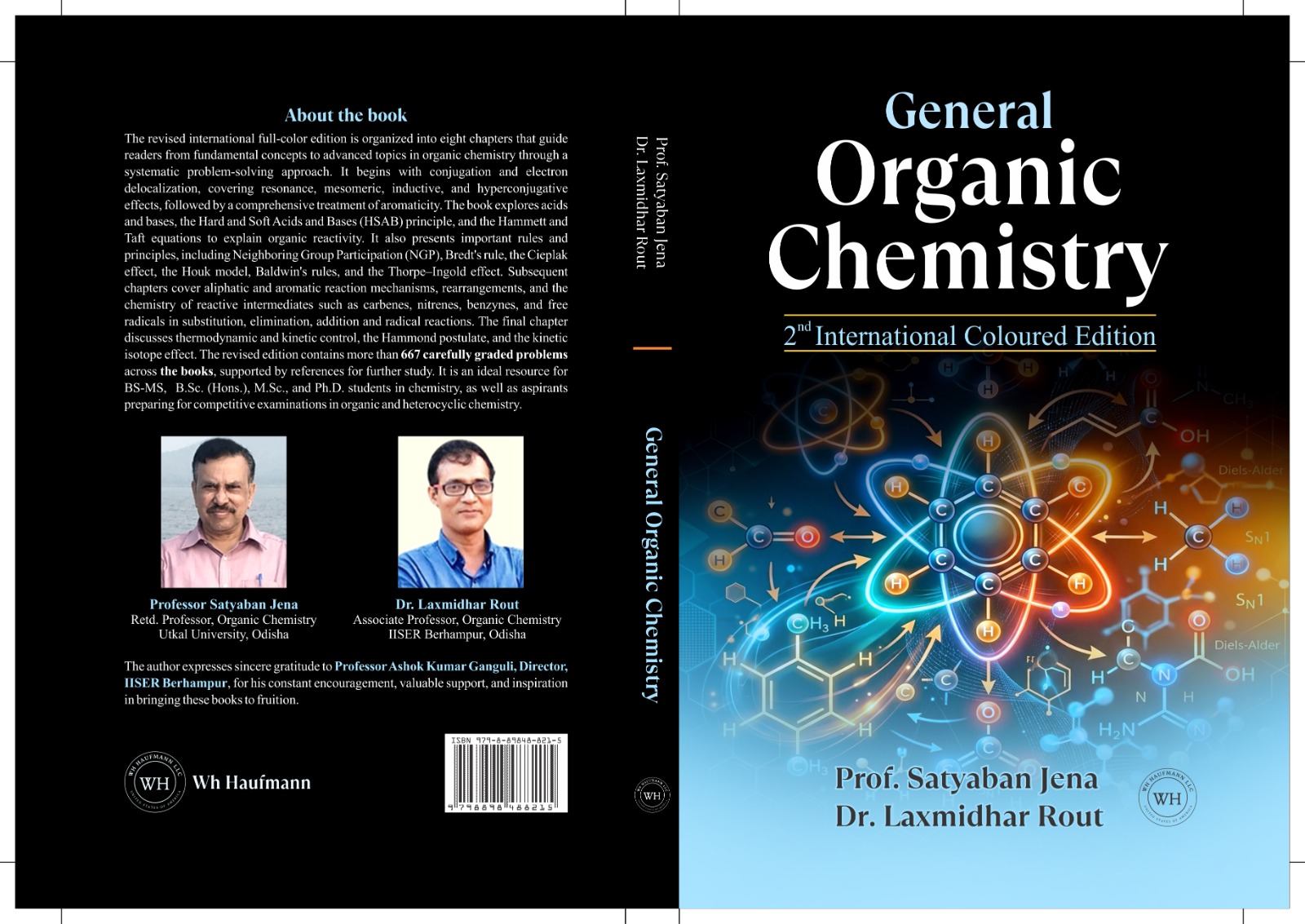
| 1. Prof. Satyaban Jena and Dr. Laxmidhar Rout; GENERAL ORGANIC CHEMISTRY[Problem Solving Approach]; Revised Second International Edition 2026 (Colored); ISBN: 979-8-89848-821-5; (WH HAUFMANN LLC, USA) |
 |
|
There are eight chapters in revised edition in the book starting from scratch to complex level. Chapter 1 is started with problems on conjugation and delocalisation covering resonance, mesmeric effect, hyper conjugation and inductive effect. Chapter 2 is started with problems on aromaticity including complete explanation. Chapter 3 deals with acid, base, HSAB and Hammet and taft equation. Chapter 4 covers all rules and principles such as NGP, Bredt’s rule, Ceiplak, Houk, Baldwin and Thrope effect. Chapter 5 is related to aliphatic organic reaction and rearrangement including elimination, addition, substitution, radical, carbene, Ketene and nitrene. Chapter-6 includes synthesis and reactivity of Carbene, Nitrene, Benzyne, Free Radical. Chapter 7 is related to problems related to aromatic organic reactions including, electrophilic, nucleophilic and addition- elimination mechanisms; whereas Chapter 8 contain very important reaction based on thermodynamic and kinetic control of reactions including Hammond intermediate and kinetic isotope effect with tunnelling effect. The revised second edition has more than 667 problems and 204 pages with references. This problem-solving book is an excellent resource for students of MSc Chemistry, BSc (Hons Chemistry), and PhD Chemistry programs, and for aspirants preparing for organic chemistry–related competitive exams in institutes and universities.The authors anticipate that the workbook in "General Organic Chemistry: A Problem-Solving Approach" will be well received by students, teachers, and scientists. We encourage all those who will read and use this book to contact us with any comments, suggestions, or corrections for future editions. Importantly, Care has been taken to put maximum reference in book wherever possible. |
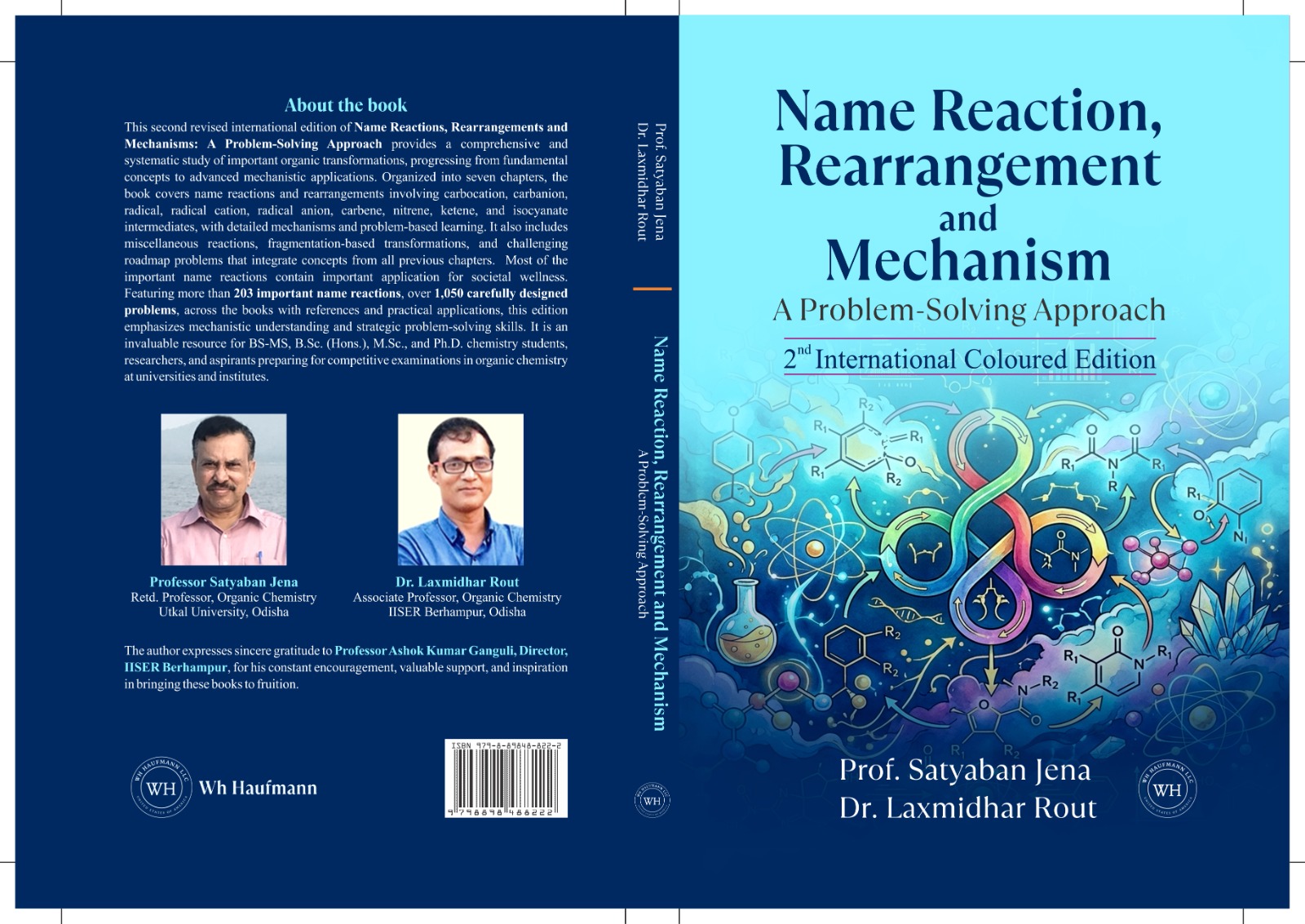
| 2.Prof. Satyaban Jena and Dr. Laxmidhar Rout; NAME REACTION, REARRANGEMENT AND MECHANISM [Problem Solving Approach]; Revised Second International Edition 2026 (Colored); ISBN: 979-8-89848-822-2 ; (WH HAUFMANN LLC, USA) |
 |
|
There are seven chapters in the book starting from scratch to complex level. Chapter 1 is started with problems on carbonation based name reaction and rearrangement including complete mechanism. Chapter 2 deals with name reaction and rearrangement of carbanion intermediate. Chapter 3 covers radical based name reaction and rearrangement including radical cation and radical anions. Chapter 4 is related to name reaction and rearrangement and mechanism of carbene based intermediates including nitrene, ketene and isocyanate. Chapter 5 is related to problems miscellaneous name reaction and rearrangement not covered in earlier chapters, whereas Chapter 6 contain very important fragmentation based name reaction and mechanism. Chapter 7 contains road map problems based on name reaction and rearrangement. This final chapter is designed based on the knowledge of all previous chapters. The revised second edition has more than 261 reagents, 1490 problems and 336 pages with references. This problem-solving book is an excellent resource for students of MSc Chemistry, BSc (Hons Chemistry), and PhD Chemistry programs, and for aspirants preparing for organic chemistry–related competitive exams in institutes and universities The authors anticipate that the workbook in "Reagent and Mechanism in Organic Synthesis: A Problem-Solving Approach" will be well received by students, teachers, and scientists. We encourage all those who will read and use this book to contact us with any comments, suggestions, or corrections for future editions. |
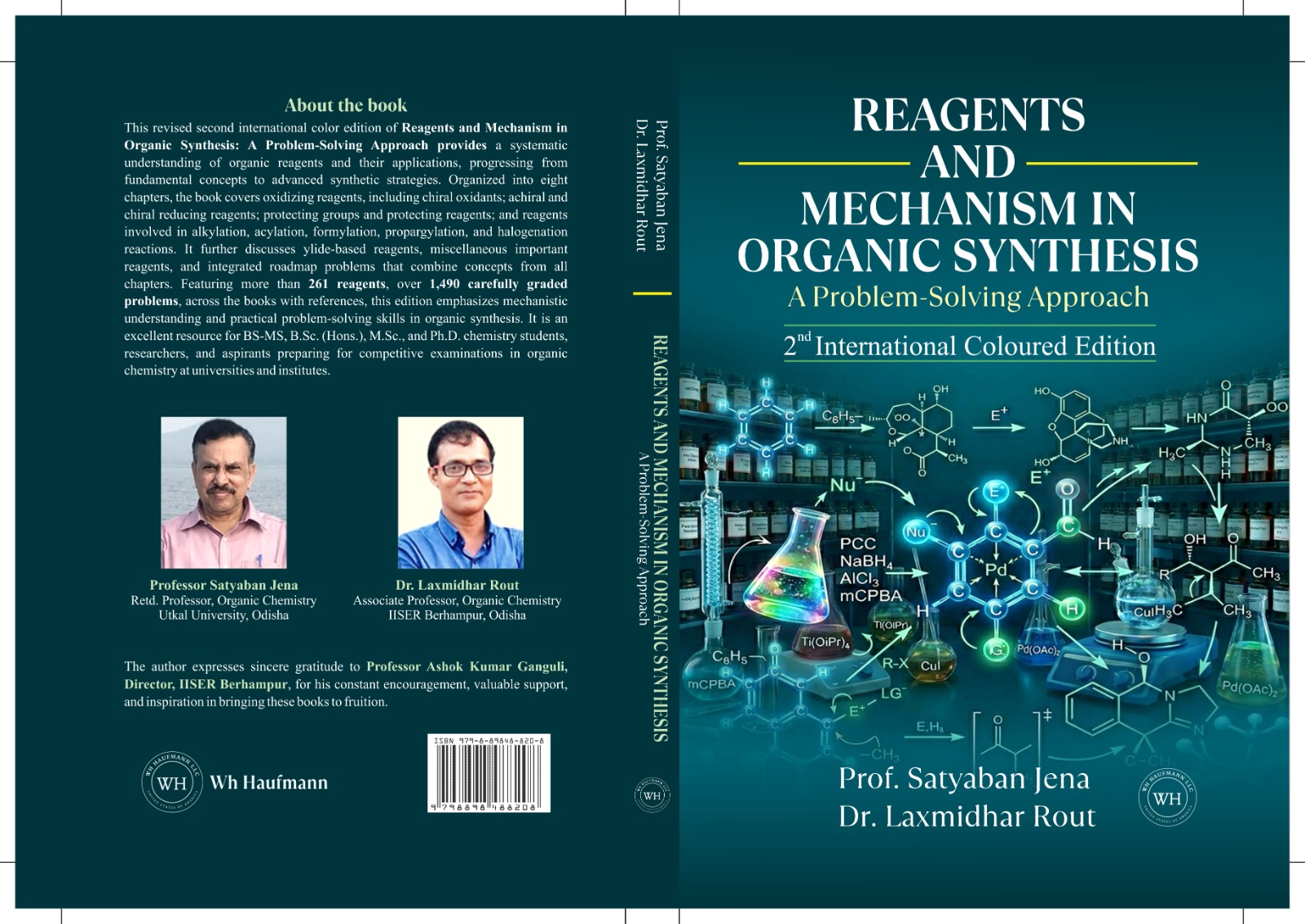
| 3 .Prof. Satyaban Jena and Dr. Laxmidhar Rout; REAGENTS AND MECHANISM IN ORGANIC SYNTHESIS; [Problem Solving Approach]; Revised Second International Edition 2026 (Colored); ISBN: 979-8-89848-820-8 ; (WH HAUFMANN LLC, USA) |
 |
|
here are eight chapters in the book starting from scratch to complex level. Chapter 1 is started with problem on oxidizing reagents including chiral oxidizing reagent. Chapter 2 deals with problems on achiral and chiral reducing reagent, whereas chapter 3 is related to problems on protecting and protecting reagent. Chapter 5 covers with problems on reagent for alkylation, acylation, alkylation, acylation, formylation and propargylation. Chapter 5 is related to problems on reagent related to halogenation reaction. Chapter 6 covers the problems on reagent related to ylides. Chapter 7 contain other miscellaneous and important reagents not covered on previous chapters. The final chapter 8 is designed based on the knowledge of all previous chapters. This last chapter contain the road map problems related previous chapters. The revised second edition has more than 974 problems and 392 pages with references. This problem-solving book is an excellent resource for students of MSc Chemistry, BSc (Hons Chemistry), and PhD Chemistry programs, and for aspirants preparing for organic chemistry–related competitive exams in institutes and universities. The authors anticipate that the workbook in "Reagent and Mechanism in Organic Synthesis: A Problem-Solving Approach" will be well received by students, teachers, and scientists. We encourage all those who will read and use this book to contact us with any comments, suggestions, or corrections for future editions. |
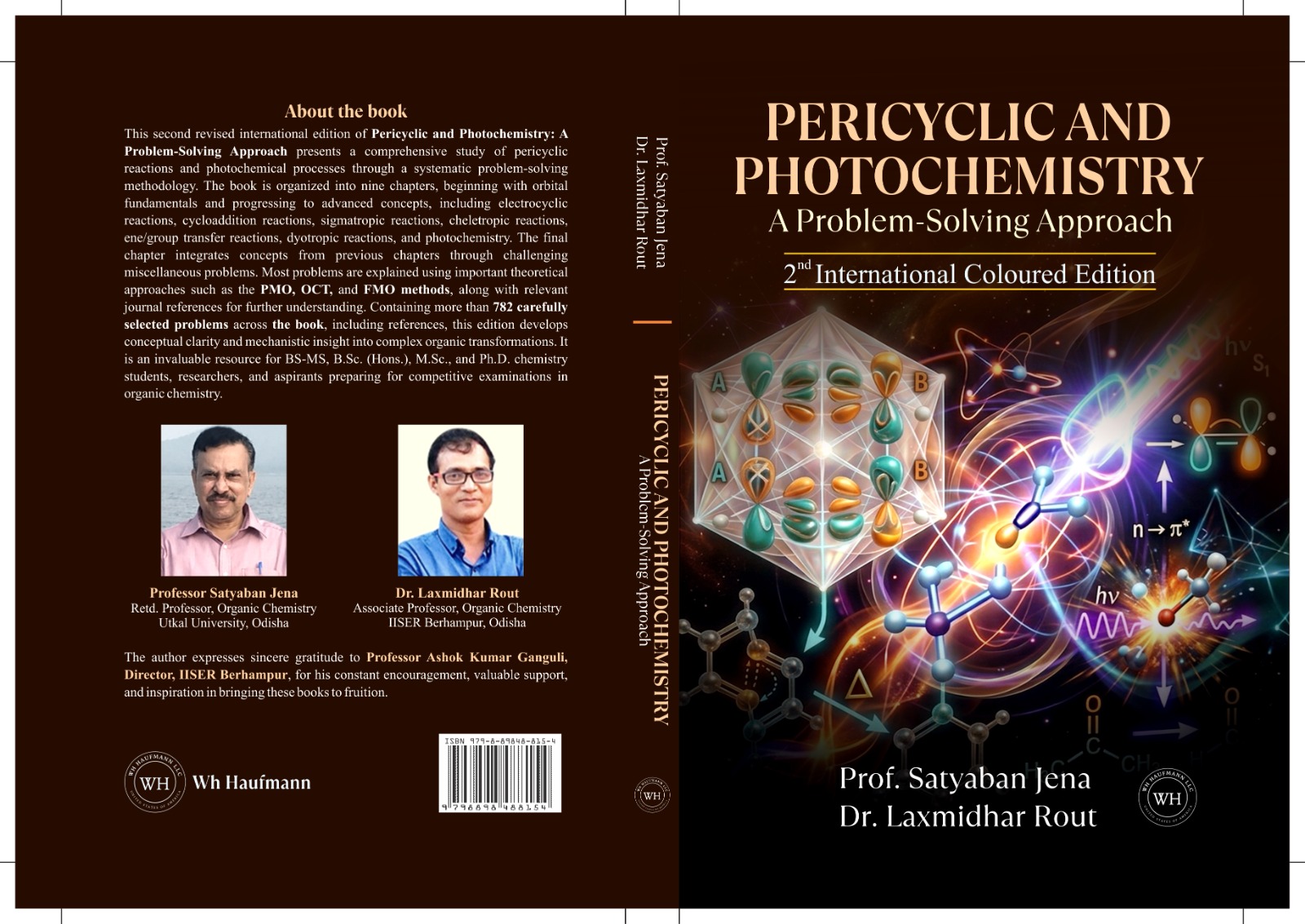
| 4.Prof. Satyaban Jena and Dr. Laxmidhar Rout; PERICYCLIC AND PHOTOCHEMISTRY; ; [Problem Solving Approach]; Revised Second International Edition 2026 (Colored); ISBN: 979-8-89848-815-4 ; (WH HAUFMANN LLC, USA) |
 |
|
There are nine chapters in the book. Chapter 1 starts with problems in orbital fundamentals in order to understand the subsequent chapters. Chapter 2 deals with problems in electrocyclic reactions, whereas Chapter 3 is related to problems in cycloaddition reactions. Chapter 4 covers problems in sigma-tropic reactions, and Chapter 5 is related to problems in cheletropic reactions. Chapters 6 and 7 cover the problems of the ene/group transfer reaction and the dyotropic reaction. Problems in photochemistry are covered in Chapter 8. The final chapter, Miscellaneous Problems in Pericyclic and Photochemistry, is designed based on the knowledge of all previous chapters. Most of the problems were explained through the PMO, OCT, and FMO approaches with requisite journal references. The book contains more than 782 problems and 254 pages including references. This problem-solving book is an excellent resource for students of MSc Chemistry, BSc (Hons Chemistry), and PhD Chemistry programs, and for aspirants preparing for organic chemistry–related competitive exams in institutes and universities. The authors anticipate that the workbook in "Pericyclic and Photochemistry: A Problem-Solving Approach" will be well received by students, teachers, and scientists. We encourage all those who will read and use this book to contact us with any comments, suggestions, or corrections for future editions. |
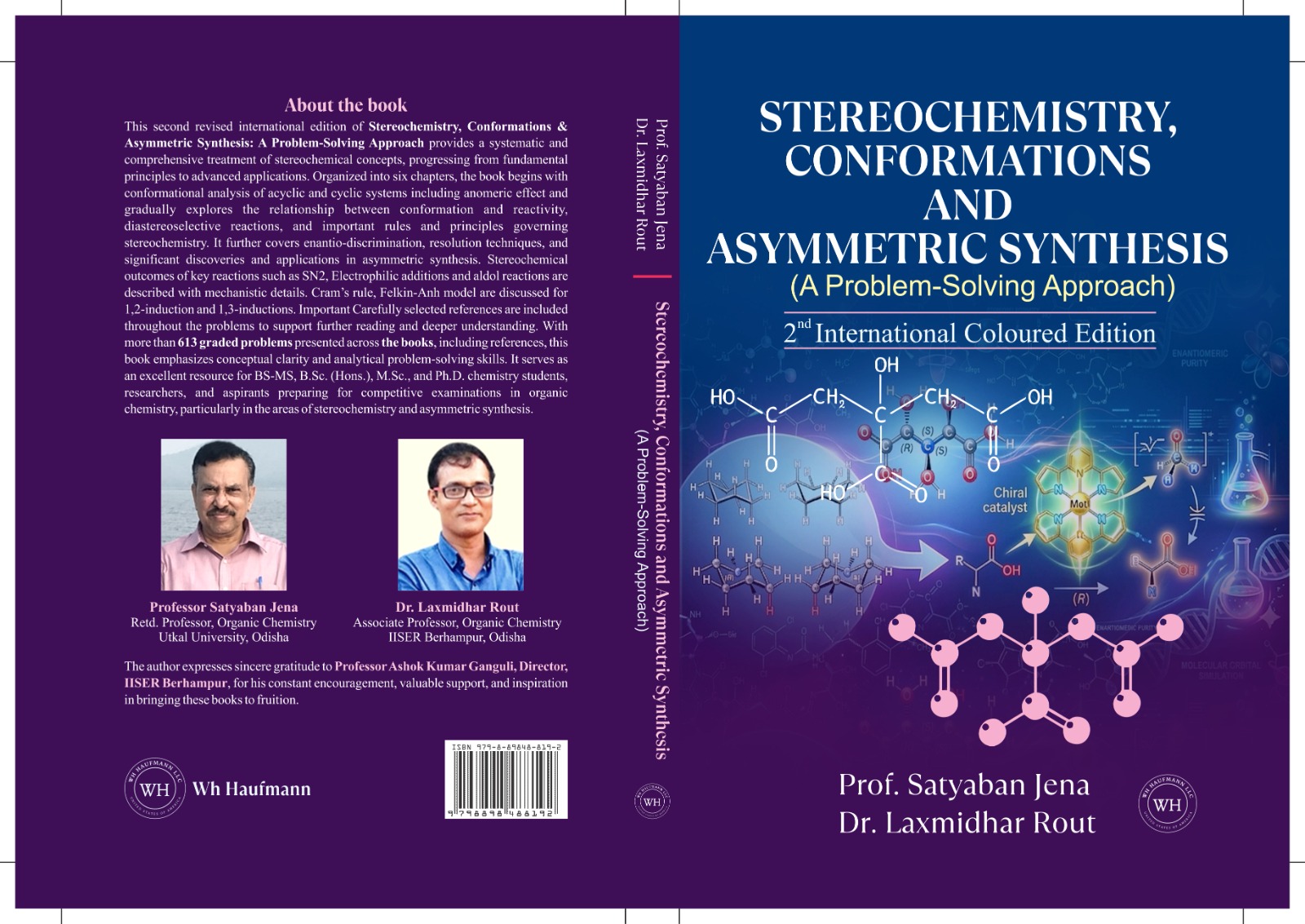
| 5 .Prof. Satyaban Jena and Dr. Laxmidhar Rout; STEREOCHEMISTRY, CONFORMATIONS AND ASYMMETRIC SYNTHESIS ; [Problem Solving Approach]; Revised Second International Edition 2026 (Colored); ISBN: 979-8-89848-819-2 ; (WH HAUFMANN LLC, USA) |
 |
|
There are six chapters in the book starting from scratch to complex level. Chapter 1 is started with problems on Conformational analysis Chapter 2 deals with Conformation and Reactivity. Chapter 3 covers diastereoselective reactions. Chapter 4 is related to all rules and principles of Stereochemistry. Chapter 5 is related to Enantio-discrimination and resolutions. Chapter 6 is related to important discovery and application of asymmetric synthesis. Reference is added in most of the problems for further reading. The book contains more than 613 problems and 224 pages including references. This problem-solving book is an excellent resource for students of MSc Chemistry, BSc (Hons Chemistry), and PhD Chemistry programs, and for aspirants preparing for organic chemistry–related competitive exams in institutes and universities. The authors anticipate that the workbook in "Stereochemistry, Conformations & Asymmetric Synthesis: A Problem-Solving Approach" will be well received by students, teachers, and scientists. We encourage all those who will read and use this book to contact us with any comments, suggestions, or corrections for future editions. |
|
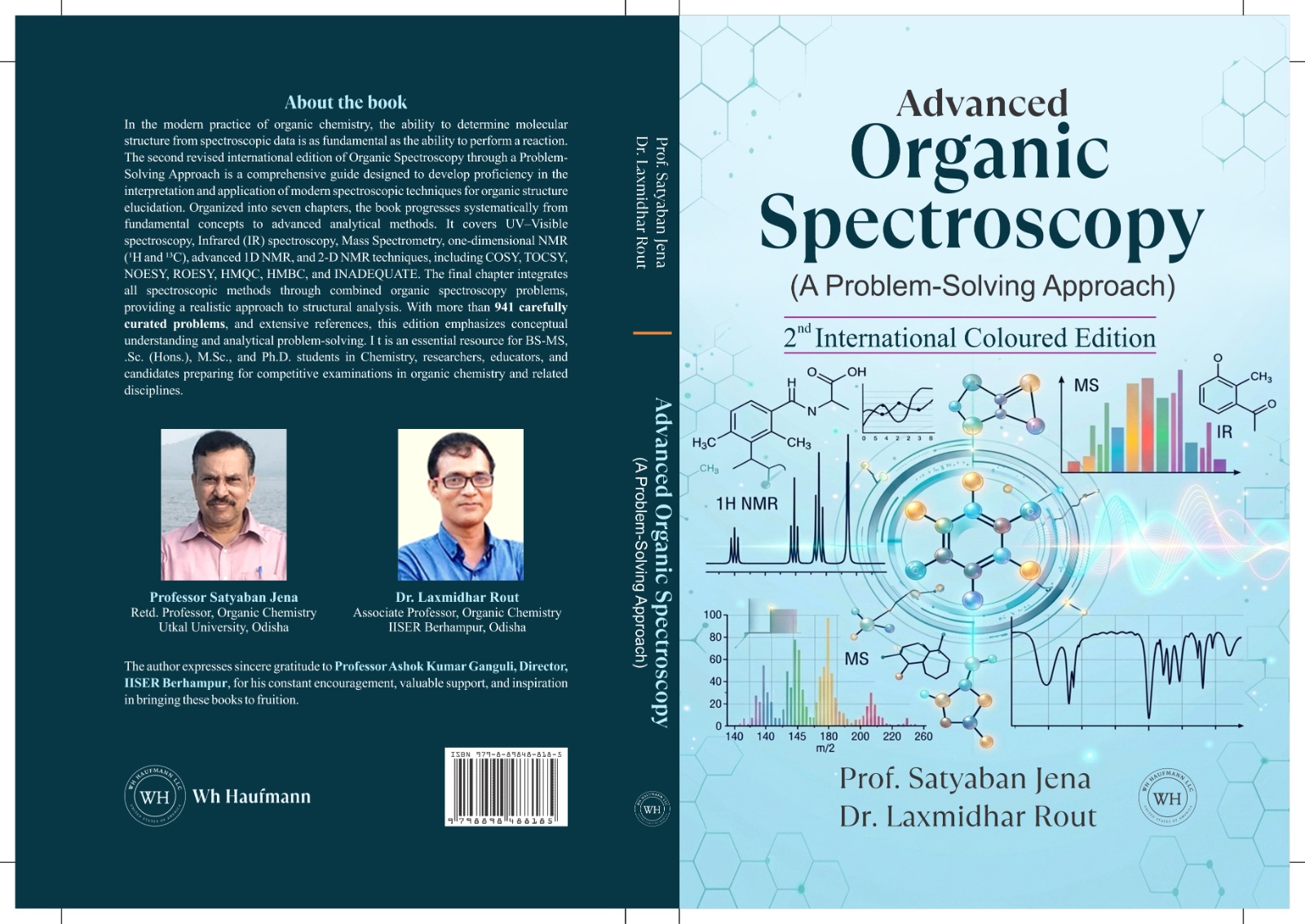
6 .Prof. Satyaban Jena and Dr. Laxmidhar Rout; ADVANCED ORGANIC SPECTROSCOPY ; [Problem Solving Approach]; Revised Second International Edition 2026 (Colored); ISBN: 979-8-89848-818-5 ; (WH HAUFMANN LLC, USA) |
 |
|
There are seven chapters in the book starting from scratch to complex level in comparison to first edition. Chapter 1 is started with problem on UV-Visible spectroscopy. Chapter 2 deals with problems on Infra-Red spectroscopy, whereas chapter 3 is related to problems on mass spectroscopy. Chapter 4 covers with problems on Nuclear magnetic spectroscopy (proton and carbon). Chapter 5 cover advanced ID NMR, whereas second edition has separate 2D NMR as chapter 6 covering NOESY, INADEQUATE, COSY, TOESY, ROESY, HMBC, HMQC and the final chapter 7 is designed based on the knowledge of all previous chapters. The last chapter is so called combined organic spectroscopy. The revised second edition has more than 941 problems and 276 pages with references. This problem-solving book is an excellent resource for students of MSc Chemistry, BSc (Hons Chemistry), and PhD Chemistry programs, and for aspirants preparing for organic chemistry–related competitive exams in institutes and universities. The authors anticipate that the workbook in "Advanced Organic Spectroscopy: A Problem-Solving Approach" will be well received by students, teachers, and scientists. We encourage all those who will read and use this book to contact us with any comments, suggestions, or corrections for future editions. Importantly, Care has been taken to put maximum reference in book wherever possible. |
|
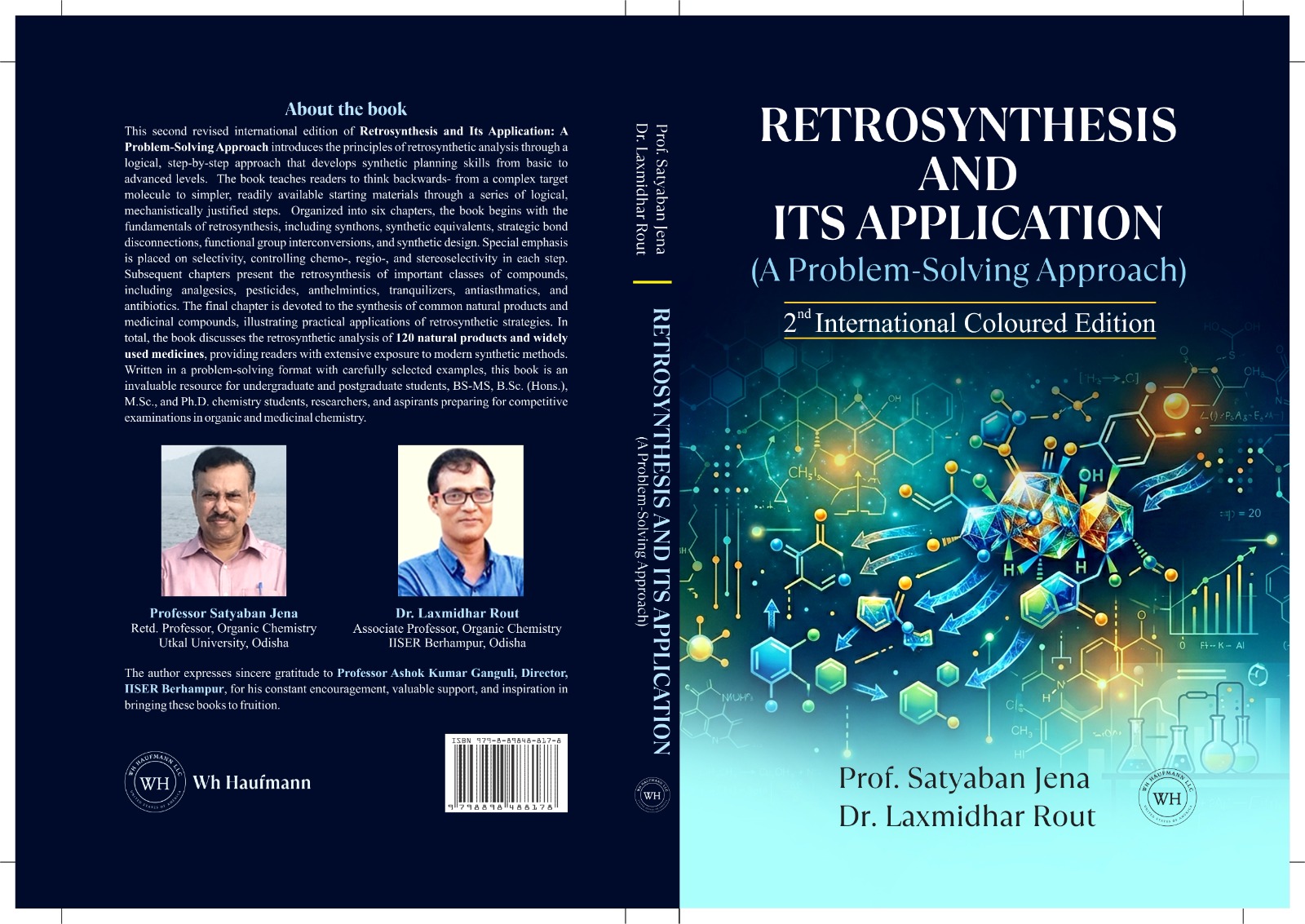
7.Prof. Satyaban Jena and Dr. Laxmidhar Rout; RETROSYNTHESIS AND ITS APPLICATION ; [Problem Solving Approach]; Revised Second International Edition 2026 (Colored); ISBN: 979-8-89848-817-8 ; (WH HAUFMANN LLC, USA) |
|
|
|
There are six chapters in the book starting from scratch to complex level. Chapter 1 is started with basics of Retrosynthesis explaining tricks of disconnection. Chapter 2 deals with retrosynthesis of analgesics, whereas chapter 3 is related to synthesis of pesticides. Chapter 4 covers Retrosynthesis of Anthelmintic, Tranquilizer, Antiasthmatics. Chapter 5 cover retrosynthesis of Antibiotic and the final chapter 6 is devoted for Synthesis of Common Natural Products and medicines. A total of 120 natural product and common medicines were covered in the book. The book contains more than 235 problems and 134 pages including references. This problem-solving book is an excellent resource for students of MSc Chemistry, BSc (Hons Chemistry), and PhD Chemistry programs, and for aspirants preparing for organic chemistry–related competitive exams in institutes and universities. The authors anticipate that the workbook in " Retrosynthesis and Its Application, Problem Solving Approach” will be well received by students, teachers, and scientists. We encourage all those who will read and use this book to contact us with any comments, suggestions, or corrections for future editions. |
|
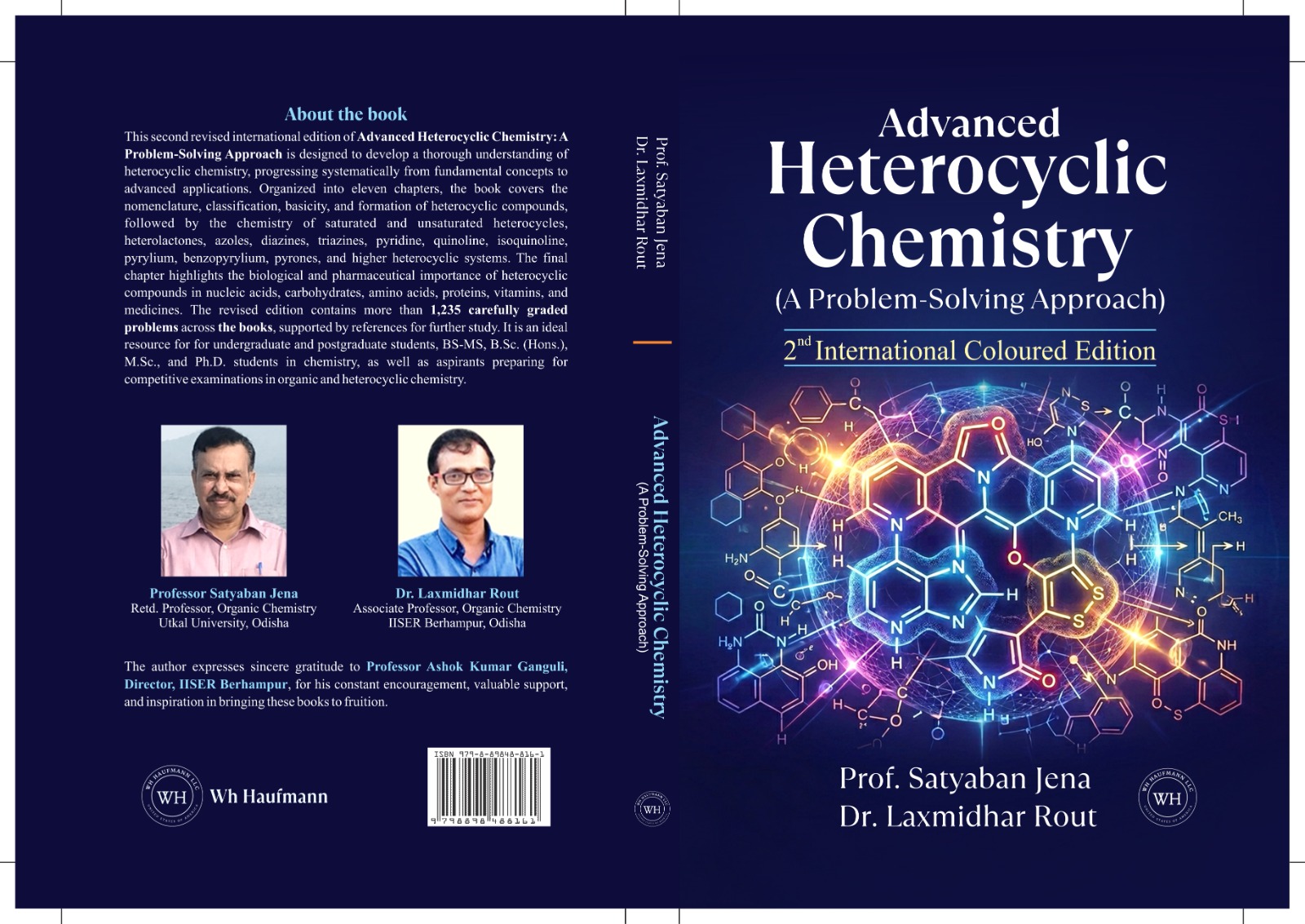
8: Prof. Satyaban Jena and Dr. Laxmidhar Rout; ADVANCED HETEROCYCLIC CHEMISTRY ; [Problem Solving Approach]; Revised Second International Edition 2026 (Colored); ISBN: 979-8-89848-816-1 ; (WH HAUFMANNLLC, USA) |
|
|
|
There are eleven chapters in the book starting from scratch to complex level. Chapter 1 is started with definitions of heterocyclic chemistry including its importance, nomenclature, degrre of saturations, basicity and general rules of heterocyclic formation. Chapter 2 deals saturated heterocycles ranging from three members to 8-member ring. Chapter 3 covers all type of hetero lactones and their chemistry. Chapter 4 is related to chemistry of pyrrole, furan and thiophene. Chapter 5 covers problems related to Indole, Benzofuran and Thiobenzofuran. Chapter 6 covers different azoles. Chapter 7 deals with Pyridazine, Pyrimidine, Pyrazine, Diazine, Triazine and Tetrazine. Chapter 8 contain chemistry of Pyridine, Quinoline and Isoquinoline. Chapter 9 relates to chemistry of Pyryilium, Benzopyryilium, Pyrone, Benzopyrone. Chapter 10 involves higher heterocycles such as Azepine, Oxepine, Thiepine, Azocine, Oxocine. The last chapter 11 covers societal application of heterocycles in life such as nucleic acids, carbohydrates, aminoacids, vitamins, proteins, medicines etc. The revised second edition has more than 1235 problems and 320 pages with references. This problem-solving book is an excellent resource for students of MSc Chemistry, BSc (Hons Chemistry), and PhD Chemistry programs, and for aspirants preparing for organic chemistry–related competitive exams in institutes and universities. The authors anticipate that the workbook in " Advanced Heterocyclic Chemistry: Problem-Solving Approach" will be well received by students, teachers, and scientists. We encourage all those who will read and use this book to contact us with any comments, suggestions, or corrections for future editions. |
Bok Chapter:
Papita Behera and Laxmidhar Rout, Chapter 10014 Vinyl and Aryl Chalcogenides: Sulfur-, Selenium-, and Tellurium-based Functional Groups, Comprehensive Organic Functional Group Transformations III; Elsevier Science, 2026 (In Press)